The demo-to-production gap
The pilot works in a sandbox. Nobody has designed what happens when the agent is wrong in front of a real customer, on a real deadline.
A 4–6 week fixed-scope engagement that decides who reviews what the agent produces, what happens when it's wrong, and how you know it's working, the design problem that determines whether an AI pilot turns into a production system.
4–6 weeks · fixed scope
Your AI pilot works in a demo. Now someone has to figure out how it fits into the actual workflow, who reviews what the agent produces, what happens when it's wrong, how you know it's working, and who's accountable.
That's not an engineering problem. It's a design problem. And it's the one that determines whether your AI investment produces returns or produces a stalled proof-of-concept.
This is the work every Skowak case study already describes, separating human judgment from deterministic process, redesigning workflows around that distinction, and instrumenting the result. Now it has a name.
The pilot works in a sandbox. Nobody has designed what happens when the agent is wrong in front of a real customer, on a real deadline.
No one has decided who reviews the agent's output, or what specifically triggers a handoff to a human.
A RACI matrix exists somewhere. The actual day-to-day workflow doesn't follow it, because nobody redesigned the workflow to match.
Compliance and operations agree on where the agent acts alone and where a human has to see it first, in writing, not by convention.
An evaluation framework built around this specific workflow catches quality drops before your customers notice them.
The pilot action plan bridges directly into implementation, no second round of scoping before work can start.
Bitscopic · Federal healthcare
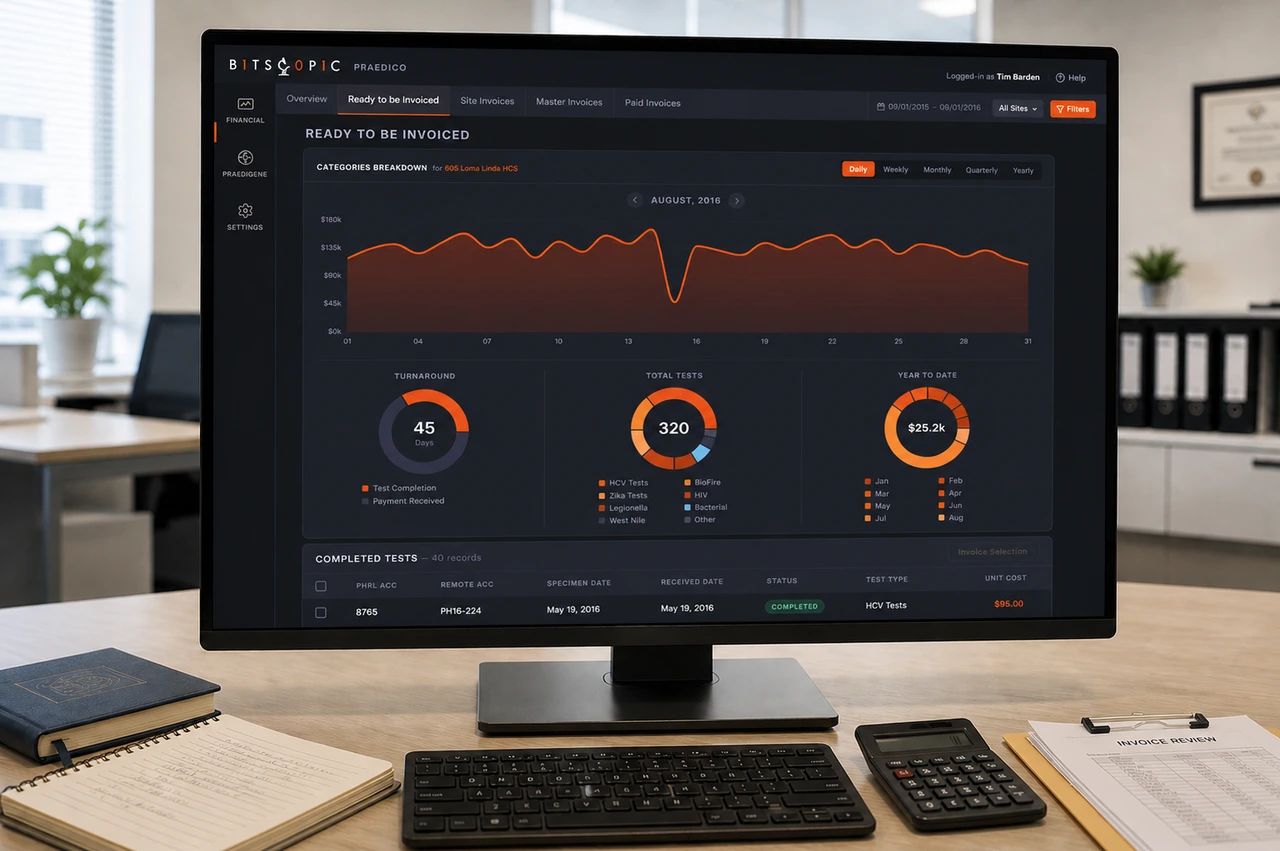
In a clinical setting the question isn't whether the system can decide, it's how the system shows its work so a professional can accept or reject it. That calibration between automation and human judgment is the exact design problem this engagement solves.
The full FAQ, pricing, scope, and how the three engagement tiers fit together, lives on the Services overview.
If your AI pilot works in a demo but nobody trusts it in production yet, that's exactly the gap this engagement closes.
Share the operational context and the first constraint that makes the project hard. Every message is read personally.