


Lower cost
Insurance application cycles cut from 2–4 days to 20–30 minutes; product setup effort down 65%. Cost falls when the deterministic work stops being done by hand.
Most AI pilots die somewhere between the demo and the workflow. We build the part that survives the retrieval, the evaluation, the interface, and the operational logic that lets real people use the thing every day.
Choosing a model is like choosing a programming language. It matters, and it is not where the work is.
The work is everything the model has to survive inside: messy data that was never meant to be read by a machine, business rules nobody has written down, compliance constraints that can't be waived, and people whose job you're about to change.
That's the gap most AI projects fall into. The prototype impresses everyone in the room. Then it meets the actual operation, and it quietly never ships.
A demo proves something is possible. A production system proves it's reliable. Those are different engineering problems.
Insurance application cycles cut from 2–4 days to 20–30 minutes; product setup effort down 65%. Cost falls when the deterministic work stops being done by hand.
Every system ships instrumented with evaluation harnesses, so quality is measured rather than assumed delivery experience from insurance underwriting and federal healthcare data.
Commercial solar design compressed from hours or days to 10–25 minutes. Speed comes from encoding the constraints where the work happens.
Long before "AI transformation" had a name, this was the underlying job: taking dense, regulated, operationally tangled domains and turning them into software people could actually use.
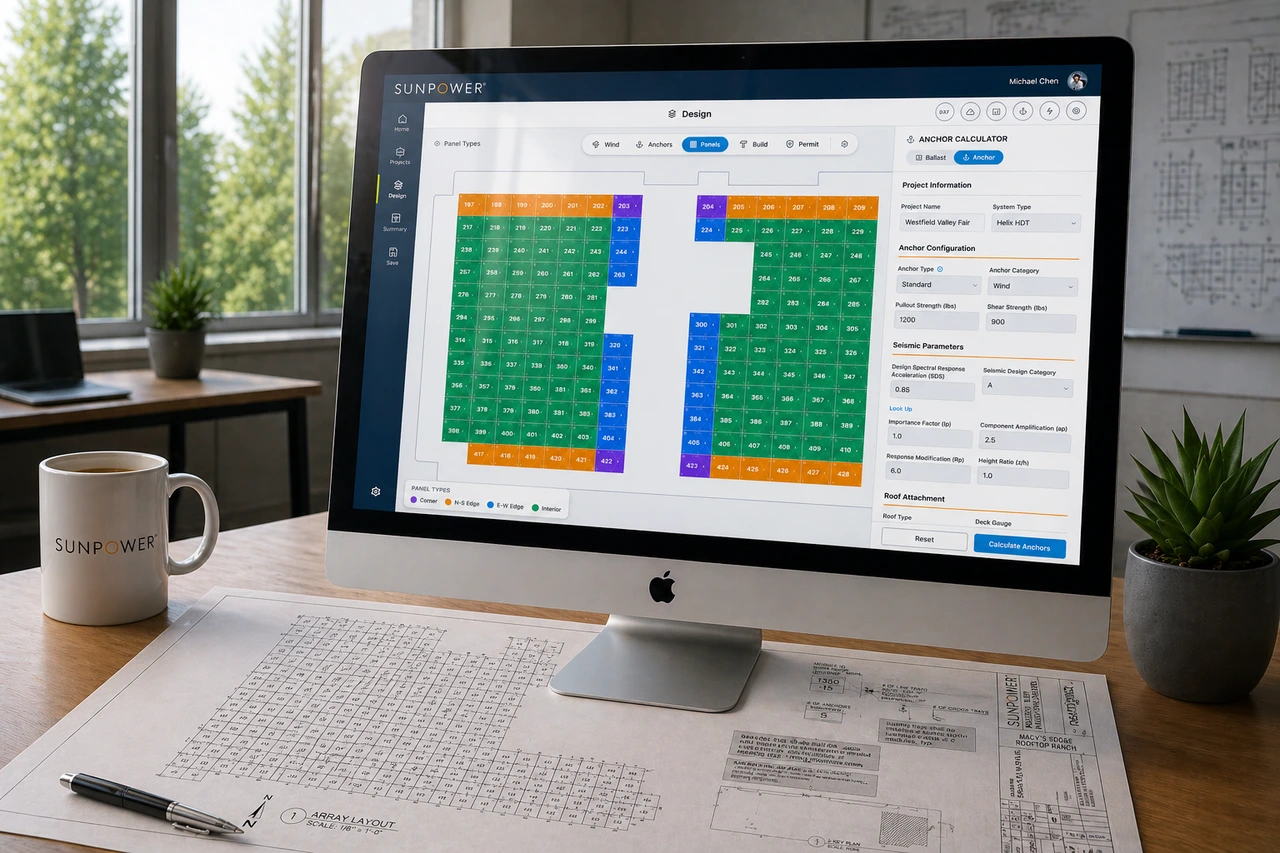
SunPower
A technical design and configuration process that took hours or days per project, compressed into a single 10–25 minute workflow.
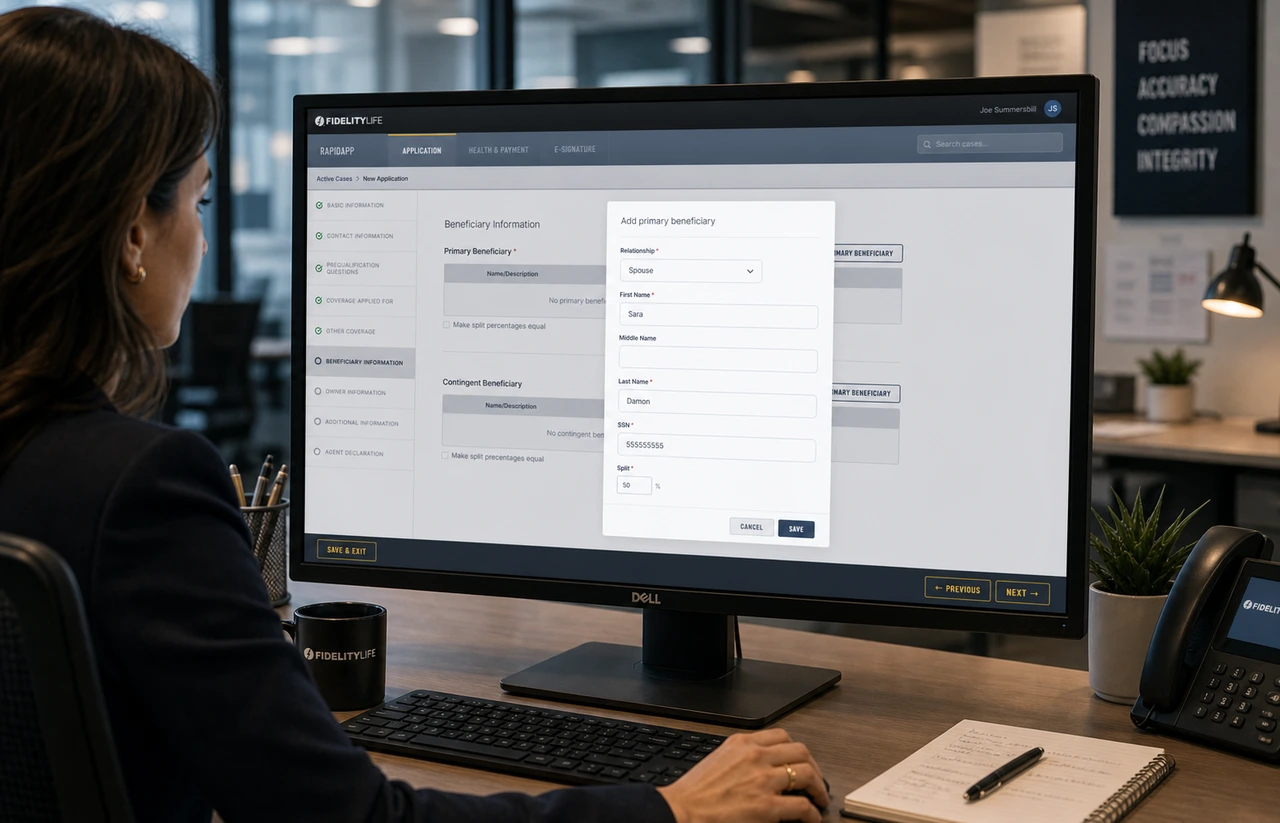
Fidelity Life
Underwriting and case-management workflows rebuilt around the line between deterministic rules and genuine human judgment.
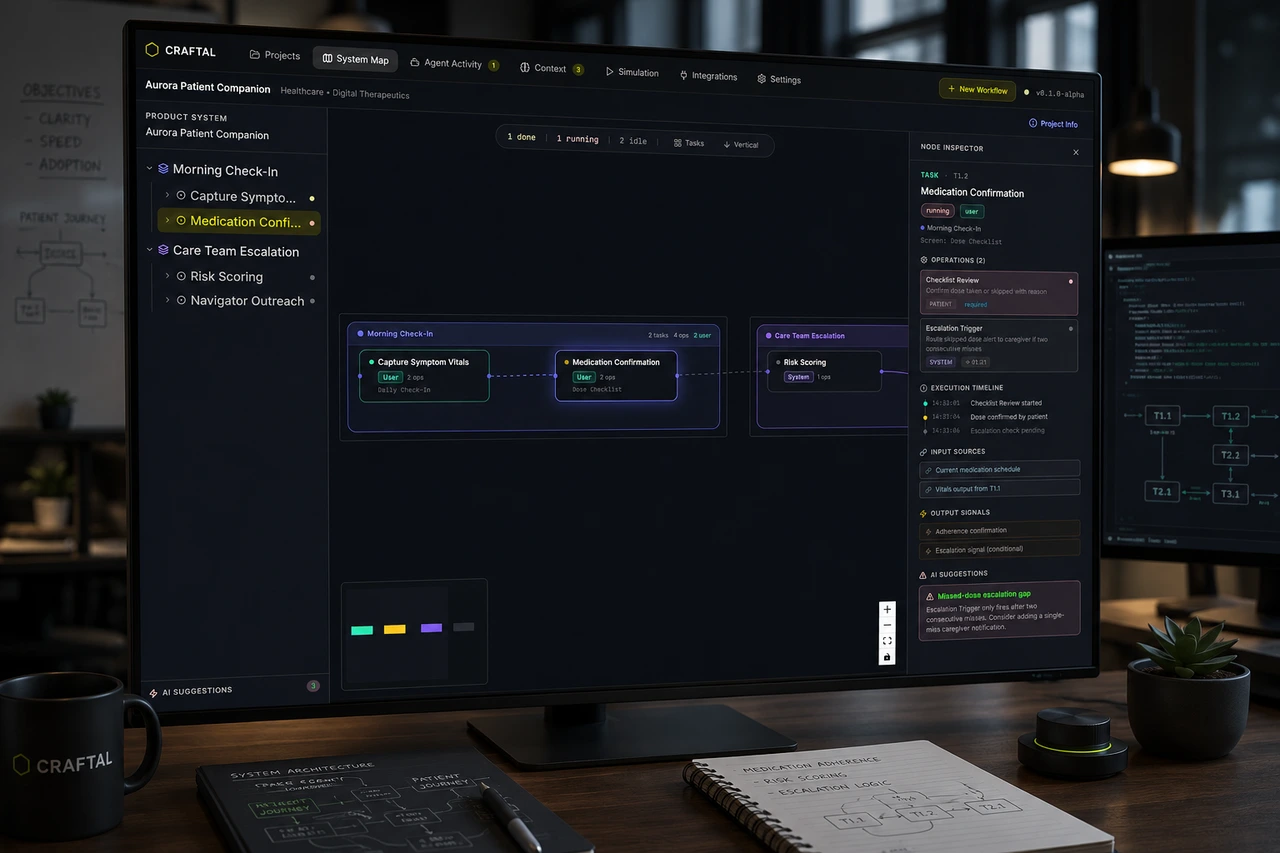
Own system · AI-native
A research-based workspace that turns product context into an inspectable system model rather than a wall of generated text.
Enter where you need to start. Each tier delivers independently; together they form a natural progression.
Tier 1 · Map
2–3 weeks, fixed fee. We find where AI creates real value in your operation and hand you a costed build plan including the projects you should not do.
Tier 2 · Build
4–6 weeks, fixed scope. End-to-end redesign of a critical business process with AI agents, human-in-the-loop oversight, and evaluation criteria for every decision point.
Tier 3 · Build + Prove
Monthly, minimum 3 months. We embed in your team to build, instrument, and prove the system works then transfer ownership.
20
years of complex-systems work
5
regulated and operational domains
16+
product ecosystem shipped at SunPower
2011
production systems in regulated domains since
The firms competing for this work are excellent and expensive, and they staff your project with whoever is available. You buy the brand and meet the team later.
Skowak is the whole engagement. The person who runs discovery is the person who designs the system and writes the code. Nothing gets lost in a handoff between the person who understood your business and the person who built the thing, because they're the same person.
That's a real constraint as well as a real advantage: Skowak takes on a small number of engagements at a time, and will tell you early if yours isn't a fit.
The domain is modelled, the interface designed, and the system built by the same person. Most of the value in AI work lives in the seams between those.
Insurance underwriting, federal healthcare data, energy operations domains where "just ship it and iterate" isn't available.
This category rewards judgment about what will break in production. That's not a thing you can shortcut.
Step 1 Map
Find the work worth automating. Not the flashiest use case the one where your data and your institutional knowledge give you an advantage a competitor can't copy. Most of this stage is subtraction: ruling out the projects that will fail.
Step 2 Build
Design and build the system end to end, inside your stack and against your real constraints. Working software, not slideware, with your team involved throughout so the knowledge stays after handoff.
Step 3 Prove
Instrument it with evaluations before it ships. Define what "good" means dimension by dimension, measure it continuously, and know precisely what broke when something regresses.
Evaluations aren't a pass/fail gate. They're an instrument panel.
We call this Evaluation-Driven Design building evaluations forces the conversation nobody has had yet, producing both a system you can measure and a specification you didn't have. See the method
If you've got an AI project that's stalled, or one you haven't started because you're not sure it's real, that's the conversation Skowak is most useful in. No deck, no discovery call theatre just tell us what you're trying to do and we'll tell you honestly whether we can help.
Share the operational context and the first constraint that makes the project hard. Every message is read personally.