The scoping trap
Teams pick the AI use case that sounds impressive in a meeting, not the one the data actually supports. The gap surfaces months later, after budget is already spent.
A 2–3 week fixed-fee engagement that pressure-tests every AI candidate against your data, your constraints, and your people, so the project you commit to is the one that can actually survive contact with your operation.
2–3 weeks · fixed fee
Most AI projects fail at scoping, not at engineering. They pick a use case that sounds impressive, discover halfway through that the data isn't there or the workflow can't absorb it, and quietly die.
The Sprint front-loads that risk. In two to three weeks we go through your operation, find where AI can actually create value, and pressure-test it against reality, your data, your constraints, your people. We use Evaluation-Driven Design to force the specific questions that determine whether a project succeeds or fails, before the first line of code is written.
The deliverable is yours whether or not we work together after. If you take the plan and build it with your own team, that's a good outcome. If the Sprint says your project shouldn't be built, that's the cheapest useful answer you'll get this year.
Teams pick the AI use case that sounds impressive in a meeting, not the one the data actually supports. The gap surfaces months later, after budget is already spent.
Nobody defined what failure looks like, so a project that should have died at week two survives to week twelve on momentum alone.
Leadership commits before anyone checks whether the workflow, the data quality, or the team's capacity can absorb the change.
Not just what to build first, what to rule out, and why, so the conversation about priorities doesn't reopen every quarter.
The chosen project has already been pressure-tested against your actual data and constraints, before you've committed a build budget to it.
Stakeholders leave agreeing on what "good" means for this project, the argument that usually happens mid-build happens up front instead.
SunPower
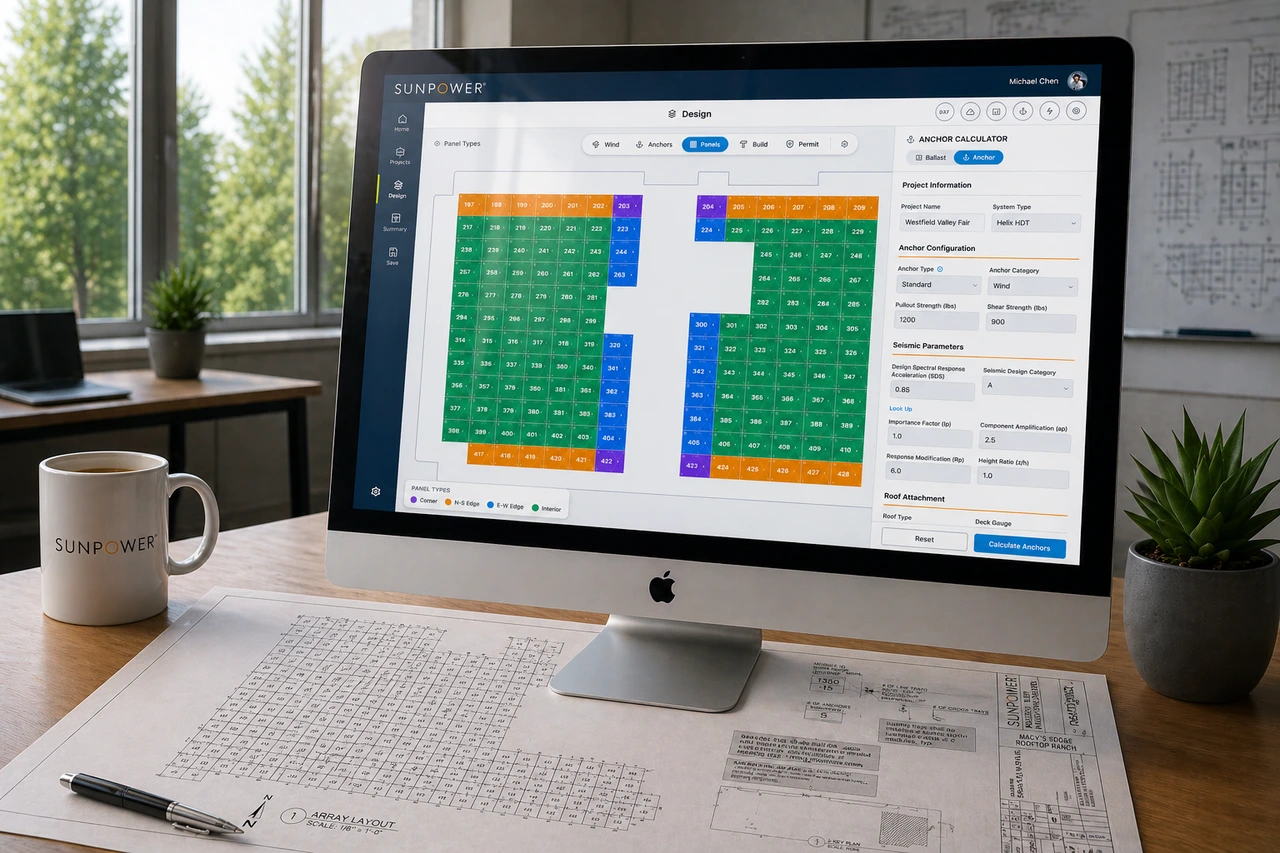
Before Skowak designed Helix, the domain had to be mapped end to end, sales, engineering, installation, sixteen-plus tools, because no single person could see the whole system. That mapping discipline is exactly what the Sprint packages into two to three weeks.
The full FAQ, pricing, scope, and how the three engagement tiers fit together, lives on the Services overview.
If you're not sure whether you need a Sprint, a Workflow Redesign, or Forward-Deployed Design Engineering, that's a five-minute conversation, not a form to fill out alone.
Share the operational context and the first constraint that makes the project hard. Every message is read personally.